Policy · South Korea
South Korea readies fines for unlicensed international schools run as academies
Fines for ignoring closure orders start on 20 November, as about 100 unlicensed schools ask lawmakers for status as alternative education institutions.
South Korean education authorities are preparing to fine and refer to police the unlicensed "international schools" that operate as private academies. About 100 of the schools have asked lawmakers to let them register as alternative education institutions instead.
From 20 November 2026, a facility that ignores a closure order can be charged an enforcement fine of 120,000 to 160,000 won a day, capped at 30 million won (about US$20,400) per order and 60 million won a year, under an amended enforcement decree. The Incheon education office has told 26 facilities they are in breach after two inspections. It plans a final inspection in October and police referrals in November.
The count
- 97 unlicensed international schools found by the Ministry of Education in inspections from December 2025 to March 2026: 39 in Gyeonggi, 33 in Seoul and 11 in Incheon
- 69 in Seoul alone, the figure Seoul's superintendent, Jung Keun-sik, gave lawmakers on 14 October
- 0 closure orders or police referrals issued in Seoul by mid-October
- 20 to 30 million won a year in typical tuition, and more than 50 million won at some schools
Most of these schools register as hagwons, or private academies, and run like schools, with daily attendance, fixed timetables, exams and often a US grade system. Their pupils earn no Korean school credit and must pass the national equivalency exam to get one. Running an unauthorised school breaks the Elementary and Secondary Education Act, which allows closure orders and penalties of up to three years in prison or a 30 million won fine.
The ministry announced a tougher plan on 29 April 2026 and promised criminal complaints against facilities that did not correct violations. Enforcement since then has been slow. Asked at the National Assembly education committee's audit whether Seoul had ordered any closures, Jung said: "Not yet." Seo Beom-soo, a People Power Party lawmaker, said the ministry had given education offices no guidelines and the offices "don't know what to do".
A new legal route
The schools asking for alternative education status say they would teach set hours of Korean language and history. The law on alternative education bars facilities whose main purpose is entry to foreign universities, or which teach mainly in a foreign language. The ministry opposes the request and says alternative education is for pupils who want a different kind of schooling, which overseas university preparation is not. In June, the South Jeolla education office rejected one operator's bid to register a planned campus in Damyang after objections from education groups.
Families exposed
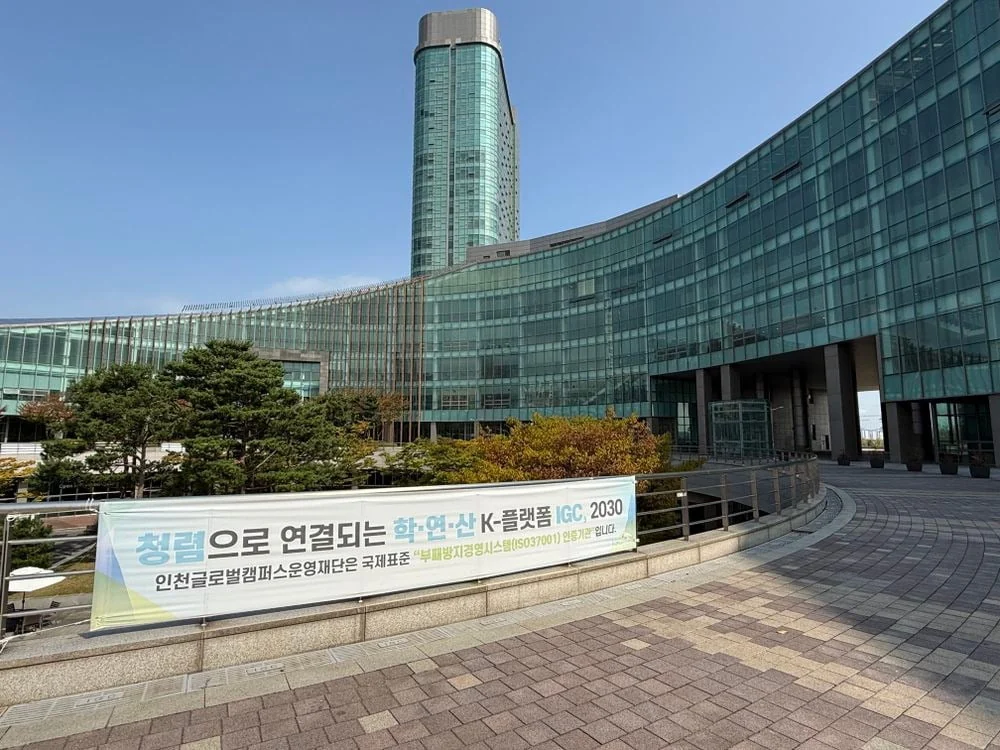
In Songdo, Incheon, an unlicensed school at Incheon Global Campus that charges about 24 to 30 million won a year was told on 8 October to leave the campus by 30 October. It owes more than 300 million won in facility fees. Former staff say their pay was late eight times, and some parents are waiting for tuition refunds.
A survey of 235 households by the Global Education Alliance, a group of unlicensed providers around Seoul, found that 7.7 per cent would move their children to a mainstream Korean school if theirs closed. The ministry says it will place returning pupils at a suitable grade.
Korea's accredited international schools mainly admit children with foreign citizenship or years spent abroad. In 2023 there were 29 of them, against about 130 unaccredited English-medium schools with some 26,000 pupils.
Sources: 5 pages
- 대안학교 노리는 미인가 국제학교 속사정, Ilyo Sisa
- 학비 3000만원 내고 체육관도 못 쓴다…수상한 국제학교, The Korea Economic Daily
- 서울 미인가 국제학교 69곳…정근식 "폐쇄 명령 아직 한 곳도 안해", Money Today
- Korea vows crackdown on unapproved international schools, The Korea Herald
- Unaccredited international schools operate in a legal gray zone, so why do parents continue to choose them?, Korea JoongAng Daily
More in Policy
More- 2 November
Dubai Arabic teachers need KHDA approval to teach Islamic Education to under-sixes
A KHDA guide sets who may teach the subject to Muslim children aged four to six, in which language, and what schools must keep for inspectors.
Dubai
Dubai · 2 November
- 2 November
Da Nang police say English centre posed as American school for 200 pupils
The centre was licensed only to teach children English. Its director has been charged with fraud and has confessed, police say.
Da Nang
Da Nang · 2 November
- 2 November
PowerSchool hack exposed 15,666 records at three Seoul international schools
The three schools still use the hacked records system, and Seoul's education office has answered with letters and a self-checklist.
Seoul
Seoul · 2 November
- 1 November
Unlicensed international school in Songdo keeps teaching past its eviction deadline
The school owes about 400 million won in rent, and Korea's education ministry admits it cannot physically stop schools like it from holding classes.
Incheon
Incheon · 1 November