In January 2017, Singapore International School Chiangmai opened with 38 pupils in Early Years and Primary 1.
Chiang Mai already had plenty of international schools. Families could choose the IB, an American or British education, or Montessori, but nobody offered the Singapore curriculum.
Daniel Maxwell heard about the plans in 2016. Signing up before the jobs were advertised, he was there for the first day of school. Today he is the head. A teacher in Asia for three decades, he also evaluates schools for the Council of International Schools and chairs the Circle of Chiang Mai International Schools.
Ten years on, SISB Chiang Mai has more than 460 pupils, from Nursery to A levels. Its growth rests on three bets.
Bet one: Singapore maths in a city of British, American and IB schools
The idea came from Bangkok. SISB opened its first campus there in 2001, as the first school in Thailand to teach the Singapore curriculum. In June 2016 the group laid a foundation stone in Chiang Mai.
Maxwell knew the Bangkok school through colleagues there. They described strong leadership, good funding and high academic standards. He was convinced the curriculum would appeal to Thai and expat families in the north.
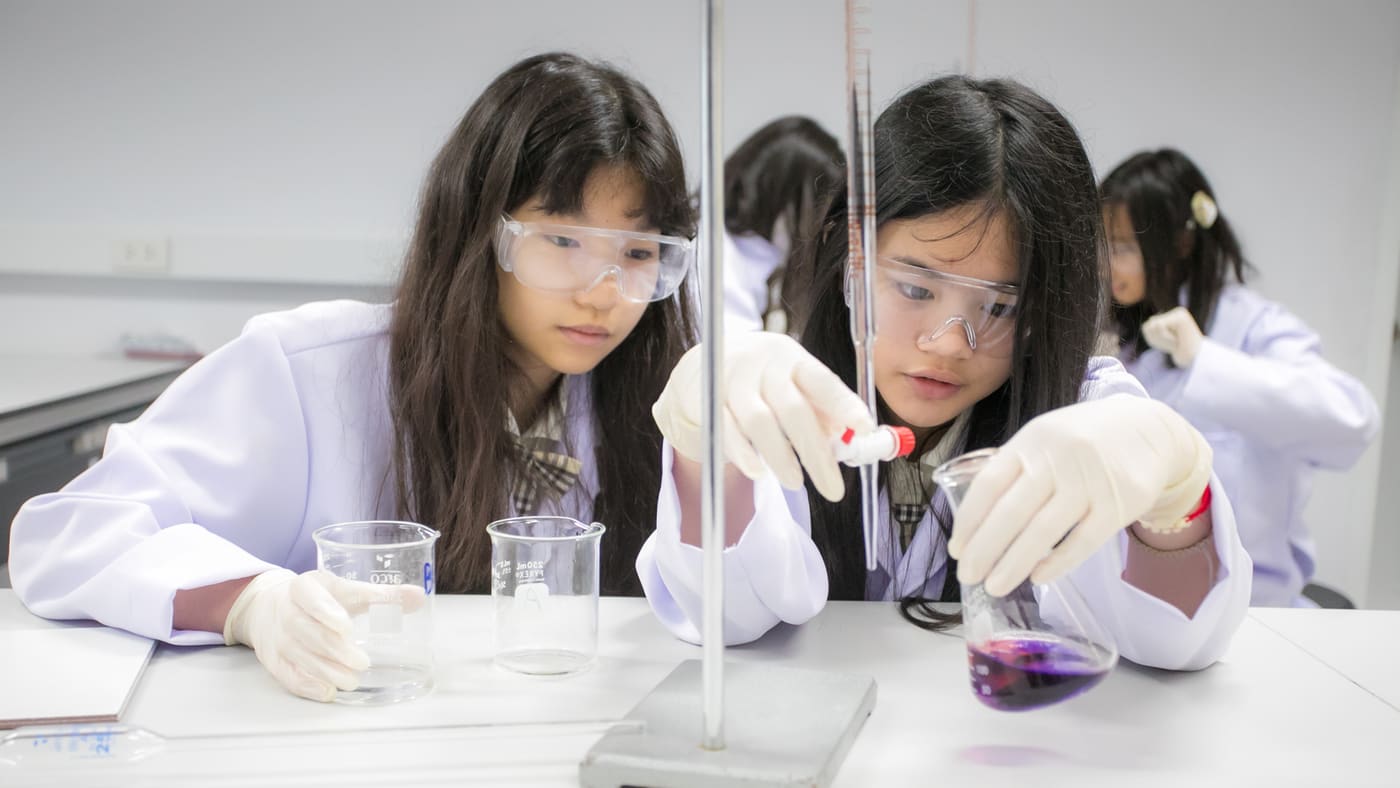
The draw was maths and science. Singapore's approach covers fewer topics in more depth, with a heavy emphasis on problem-solving. "The Singapore curriculum is world-class in mathematics and science," Maxwell says.
In 2017 that made SISB the only school in Chiang Mai teaching it.
Bet two: Mandarin and Thai alongside English, from age two
The second bet also came from Singapore. Since 1966, children in Singapore's schools have studied English as a first language plus a "mother tongue": Mandarin, Malay or Tamil.
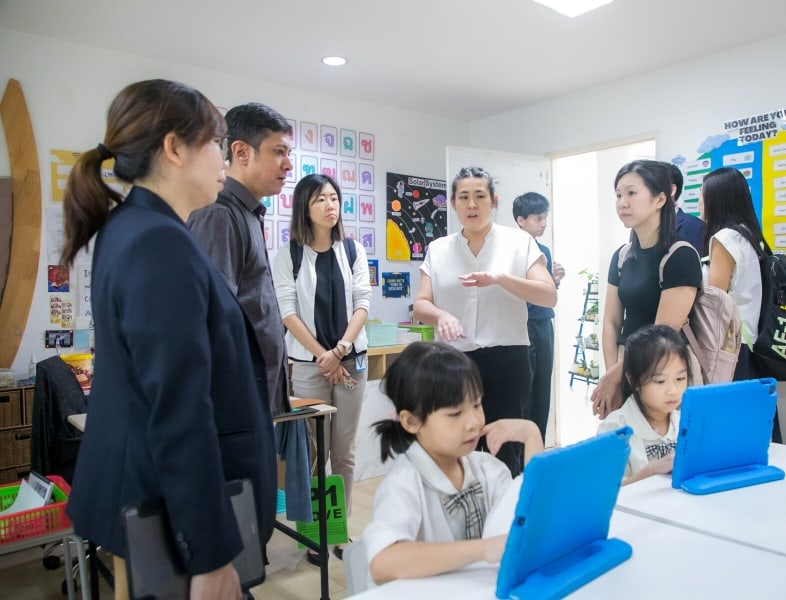
SISB adapted the model for northern Thailand. Pupils learn English, Mandarin and Thai from Nursery.
The timing was good. Chinese families were starting to move to Chiang Mai for its international schools, cheaper than in Beijing or Shanghai and less pressured. ChinaFile profiled one family who arrived in late 2016, a few months before SISB opened.
Nobody keeps an official count. Chinese parents in the city estimated that several hundred families had made the move. The trend grew after the pandemic. Lanna International School, the city's largest, saw enquiries double in 2022–23.
For families like these, a school teaching Mandarin from Nursery alongside English was an obvious fit.
Bet three: add a year group at a time, all the way to A levels
The 2016 plans were for a primary school, for children aged two to 12. The first pupils were in Early Years and Primary 1.
As they moved up, the school moved up with them. Secondary classes followed, then Cambridge IGCSEs, then A levels in the Sixth Form.
January 2017
38 pupils
Early Years and Primary 1
2026
460+ pupils
Nursery to A levels
One student in the school's video started in Primary 1. "I was really shy and I couldn't speak English that well," the student says. "The teachers are really supportive and caring. They encourage us to speak up."
Older students describe the same push. Teachers send them to debate at the World Scholars Cup. "We've won so many competitions that we would have never got to participate in another school," one says. Another credits Model UN with getting them "out of my comfort zone", speaking "in front of hundreds of people in a conference room".
A child who starts in Nursery can now stay all the way to A levels, and leave for university from the same school.
Ten years on, all three bets have paid off. The curriculum found its market. The languages suited the families arriving in the city. Pupils who started in Primary 1 now have a school that takes them to university.
The school says its graduates have won offers from UCL, Edinburgh, Toronto, British Columbia and Shanghai Jiao Tong, with help from eight full-time university counsellors shared across the SISB group.
For Maxwell, there on the first day, the measure is simpler. "What makes this job the absolute best is seeing smiling faces on campus every single day."
Sources: 6 pages
- SISB Chiang Mai: interview material from Daniel Maxwell, Head of School; school-supplied photos; student video
- SISB: Singapore International School Chiangmai
- Chiang Mai CityLife: SISB foundation stone laying ceremony (June 2016)
- ChinaFile: Chiang Mai's Chinese transfer students
- Associated Press: Chinese families seeking to escape a competitive education system have found a haven in Thailand (2024)
- Ng Chin Leong, TESOL: Mother tongue attainment in bilingual education policy: lessons from Singapore (2012)
Schools in this piece
- Singapore International School ChiangmaiBritish, Other · ages 2 to 18 · USD 10,400–18,400 a year
More in School groups
More- 21 November
ISKL awards RM60.4 million building contract as its RM88 million campus plan begins
The Kuala Lumpur school is paying for new labs, a studio theatre and an indoor golf centre largely from its reserves, with work set to take about two years.
Kuala Lumpur
Kuala Lumpur · 21 November
- 20 November
Dukes Education takes over Atalaya Colegio Internacional, its seventh school in Spain
The bilingual IB school in Estepona has more than 1,080 pupils aged 3 to 18, and no price for the deal was disclosed.
Estepona
Estepona · 20 November
- 19 November
Brighton College will open its first school in India, in Hyderabad, in August 2027
The new school starts with pre-prep pupils, teaches to IGCSE and adds an IB Diploma sixth form in August 2028.
Hyderabad
Hyderabad · 19 November

- 16 November
SISB ends September with 4,374 pupils as it readies a cheaper seventh school near Bangkok
The Thai-listed school group is below its 4,800-pupil goal for 2026, and its new Marina school in Pathum Thani will charge up to 40 per cent less.
Bangkok
Bangkok · 16 November