A levels in international schools
How A levels work in international schools: subjects, grades, the Cambridge and Pearson versions, exam dates, fees and university offers.
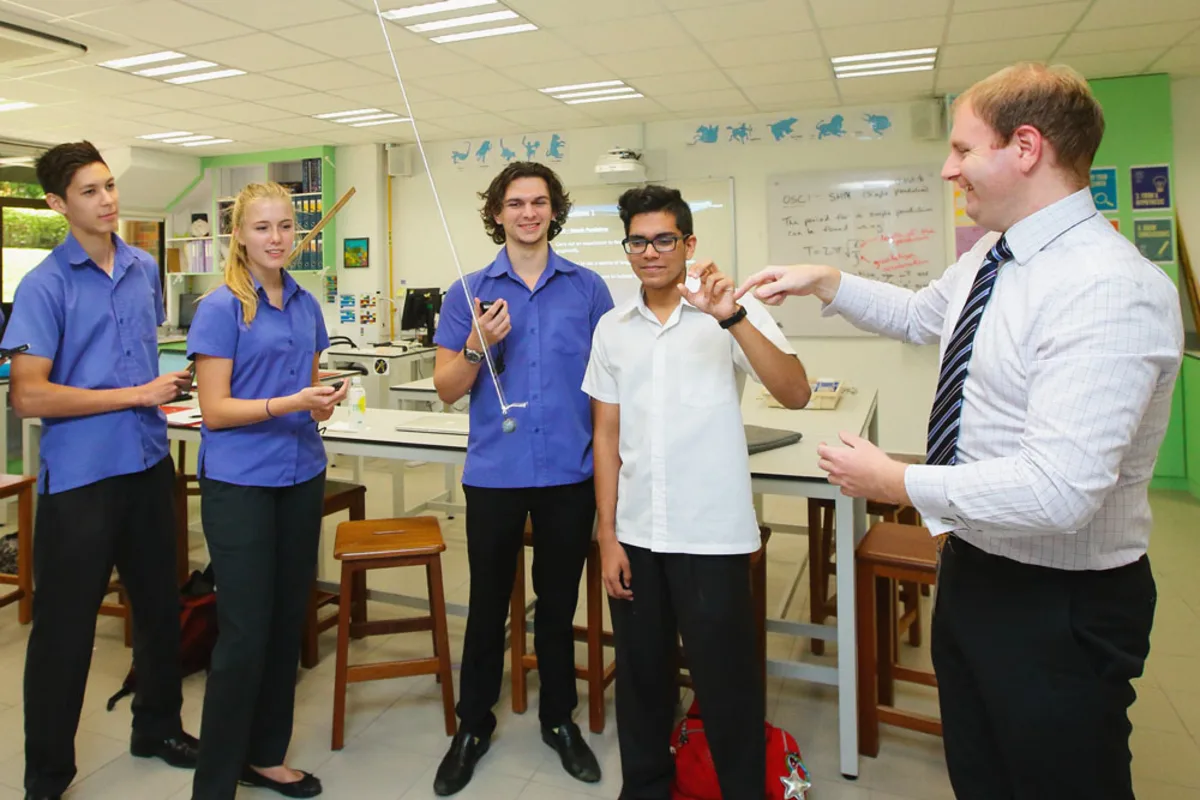
A levels are two-year courses taken between the ages of 16 and 18, in which students study three or four subjects in depth and sit external exams that universities use to make offers. They are the last stage of the English school system and are the most common final qualification in British international schools.
Students usually start them in Year 12, after (I)GCSEs at the end of Year 11. Each subject is examined and graded on its own, from A* (highest) to E (lowest pass). There is no overall diploma and no compulsory core: a student's result is simply a set of subject grades, such as A*AA.
Three or four subjects
Most students take three A levels. Some schools start strong students on four and let them drop one later.
- At Tanglin Trust School in Singapore, most Year 12 students take three subjects and keep them to Year 13. A fourth needs an expected (I)GCSE grade A or 8 across the board.
- At Dubai College, almost all sixth-formers start four A levels from 21 subjects, and a majority drop one on entering Year 13, the school's subject page says.
The choice is made at 15 or 16, often in the spring of Year 11. It is the sharpest narrowing in the English system, explained in our guide to the British curriculum. A student who drops chemistry at 16 will struggle to apply for medicine at 18, so the subjects should follow the degree in mind.
Many schools add the Extended Project Qualification (EPQ), a single long piece of independent research. Most A level students at Tanglin take it.
Grades and UCAS points
A levels are graded A*, A, B, C, D and E. AS levels, the smaller one-year qualification, are graded A to E without an A*.
UK universities apply through UCAS, which turns grades into Tariff points. Some courses ask for points; most selective ones ask for grades.
| A level grade | UCAS Tariff points |
|---|---|
| A* | 56 |
| A | 48 |
| B | 40 |
| C | 32 |
| D | 24 |
| E | 16 |
An AS level is worth less: 20 points for an A, 16 for a B and 12 for a C.
In the UK, 28.5 per cent of A level results in summer 2026 were A* or A, and 9.6 per cent were A*, according to the Joint Council for Qualifications. 97.5 per cent were passes. There were 906,425 A level entries, and maths was the most popular subject, with economics now fifth.
International schools often publish results well above those averages because many select their sixth-formers. Tanglin reported 63 per cent A* or A in 2026. Dubai College asks Year 12 applicants for at least six GCSEs at grade 7 or above, including English and maths.
Three versions of the same qualification
International schools offer A levels from three exam boards, and many mix them subject by subject.
- UK A levels, set by boards such as AQA, OCR and Pearson Edexcel and regulated in England. Many British schools abroad use them so their students sit the same papers as pupils in England.
- Cambridge International AS & A Levels, from Cambridge University Press & Assessment. They are taught in more than 130 countries, with a choice of 55 subjects in almost any combination.
- Pearson Edexcel International A levels (IAL), available only to students outside the UK. Pearson launched them in 2014, and UK NARIC confirmed in November 2017 that they meet the UK A level standard.
A fourth board, OxfordAQA, offers international A levels too, though fewer schools use it. Our guide to the four curricula of the UK explains why "British" and "English" are not the same thing.
Linear or modular
The real difference between the versions is when students sit the exams.
UK A levels in England are linear. All exams come in the summer at the end of the two-year course. Since the reforms of 2015, the AS is a standalone qualification and no longer counts towards the A level, so most students in England no longer sit it. Coursework, called non-exam assessment, is used only where an exam cannot test a skill, such as practical work.
Cambridge allows three routes:
- The linear route, with all A level papers in one series at the end.
- The staged route, with AS papers in one series and the rest of the A level in a later one.
- AS level on its own, typically a one-year course.
Pearson's IAL is modular. Each subject is split into units; the International AS (the first half) counts for 50 per cent of the full IAL. Sciences have six units, three for the AS. Students can resit individual units, and a resit does not appear on the results statement. When enough units are complete, the school asks Pearson to "cash in" the units for an overall grade.
The trade-off is plain. Modular exams spread the pressure over two years and allow resits. Linear exams test the whole course at once. England moved to linear A levels partly because modular courses and unit resits were felt not to prepare students well for degree study, Ofqual said.
Because schools mix boards, one student can sit some subjects linearly and others in units. Tanglin's own curriculum page says some of its A level courses are linear and others modular.
Exam dates
The boards run different exam seasons, which matters for families moving mid-year or planning resits.
- UK A levels: summer only, with UK results in mid-August.
- Cambridge International: June and November series. For June 2026, final entries closed on 21 February 2026, exams ran from late April to mid-June, and AS & A Level results came out on 11 August 2026.
- Pearson IAL: January, May/June and October. Provisional results follow in March, August and January.
Not every subject is offered in every series. Pearson offers accounting, biology, chemistry, economics and physics in all three; law and IT only in May/June.
Costs
A levels are not priced separately. They are part of a school's Sixth Form fees, and exam entry fees are often billed on top.
- Tanglin Trust School, Singapore: about US$45,400 a year in the Sixth Form, with exam fees of US$782 to US$1,960 by subjects.
- Dubai College: AED 110,305 a year in Years 12 and 13 (about US$30,000).
- Garden International School, Kuala Lumpur: RM134,482 a year in Years 12 and 13.
- The Alice Smith School, Kuala Lumpur: RM129,712 a year in Years 10 to 13.
These are all-in yearly fees: tuition plus compulsory yearly levies, before one-off joining fees and deposits.
Universities and entry offers
All UK universities accept Cambridge International A levels, as do more than 600 universities in the United States, according to Cambridge. Universities in Australia, Canada, Hong Kong and Singapore accept A levels routinely.
Selective UK courses set offers in grades. The University of Cambridge's typical minimum offer for mathematics is A*A*A, usually with grade 1 in the STEP 2 and STEP 3 papers, and its colleges usually want an A* in maths or further maths.
Offers often name subjects as well as grades. A university that asks for A*AA "including chemistry" will not accept the same grades in other subjects.
A levels and the alternatives
Supporters of A levels point to their depth. Critics say three subjects at 16 is narrow, and exams dominate the final two years.
The main alternative in international schools is the IB Diploma, which keeps six subject groups running to 18 alongside a core of the Extended Essay, Theory of Knowledge and service. Some schools, including Tanglin, offer both and let students choose in Year 11. Our guide to the IB sets out the Diploma, and the guide to the American curriculum covers the high school diploma and AP courses, which some American universities compare with A levels.
A levels suit students who know what they want to study and want to go deep. The IB suits students who want to keep options open or prefer breadth.
FAQ
How many A levels do you need for university?
Most UK university offers are based on three A levels. Some students take four, but most universities make offers on three.
Are international A levels the same as UK A levels?
Cambridge International and Pearson Edexcel International A levels are accepted by UK universities alongside UK A levels. The main differences are exam timing and, for Pearson, a modular unit structure.
Is the AS level still part of the A level?
For UK A levels in England, no: the AS is a separate qualification and does not count towards the A level. With Cambridge International and Pearson IAL, the AS can still form the first half of the full A level.
When are A level results released?
UK and Cambridge June results come out in mid-August; Cambridge's June 2026 results were released on 11 August 2026. Pearson IAL results follow each series in January, March and August.
Can you resit A levels?
Yes. With UK A levels, a student resits the whole subject in a later summer. With Pearson IAL, a student can resit single units, and the resit is not shown on the results statement.
What is an A* at A level?
A* is the top grade, above A. In the UK, 9.6 per cent of A level results were A* in summer 2026.
Sources: 14 pages
- Cambridge International AS & A Levels, Cambridge University Press & Assessment
- Media information: Cambridge International AS & A Level, June 2019 exam series, Cambridge International
- Key dates and activities for 2026: monthly calendar (International), Cambridge International
- Pearson Edexcel International Advanced Levels, Pearson
- Pearson Edexcel International A level (IAL) and GCE A level: guidance for universities, Pearson
- AS and A level changes: a summary, Ofqual
- AS and A level decoupling, Ofqual
- JCQ summer results Level 3 press notice 2026, Joint Council for Qualifications
- UCAS Tariff tables, UCAS
- UCAS Tariff points, UCAS
- Mathematics: entry requirements, University of Cambridge
- Sixth Form curriculum, Tanglin Trust School
- Year 12 subjects, Dubai College
- Tanglin Trust School celebrates 2026 A Level results, British Chamber of Commerce Singapore
Schools in this piece
- Tanglin Trust SchoolBritish, IB · ages 3 to 18 · USD 28,400–45,400 a year
- Dubai CollegeBritish · ages 11 to 18 · USD 26,500–30,000 a year
- Garden International SchoolBritish · ages 3 to 18 · USD 12,800–32,900 a year
- The Alice Smith SchoolBritish · ages 3 to 18 · USD 13,200–31,700 a year
More in Curricula & exams
More- 21 October
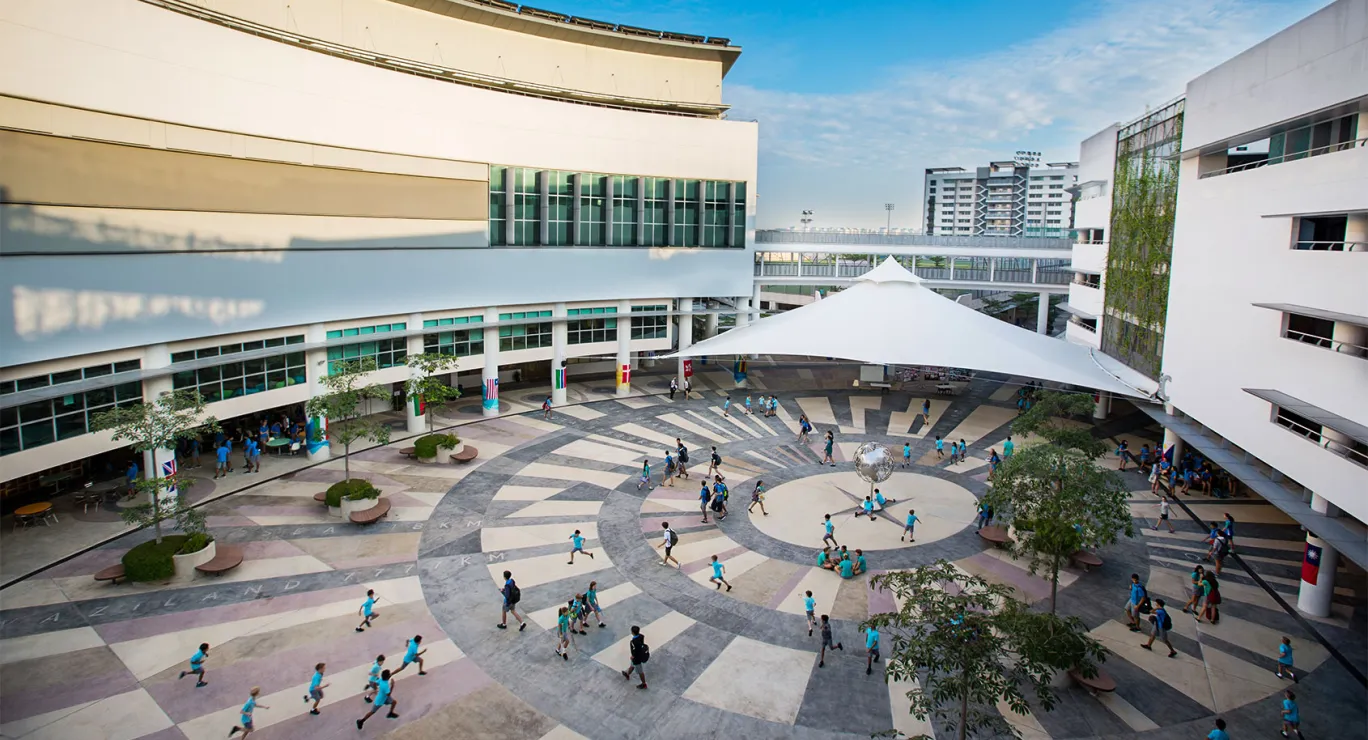
UWCSEA's first cohort without IGCSEs finishes IB Diploma level with GCSE peers
The Singapore school dropped the exams to win back 10 weeks of teaching a year, and its first results suggest pupils lost nothing.
Singapore
Singapore · 21 October
- 15 October
CBSE sets 23 to 28 October for Class 12 exams cancelled in seven Middle East countries
Pupils whose grades were assessed after the conflict halted exams in March can now sit chosen papers, and the new marks will be final.
UAE
UAE · 15 October
- 16 September
Explainer
British curriculum? The four curricula of the UK
The National Curriculum for England, The Curriculum for Wales, Curriculum for Excellence (Scotland), and the Northern Ireland Curriculum
16 September
- 13 September
Explainer
The American curriculum: The US school system from kindergarten to the AP
Elementary, middle and high school. The diploma and the AP.
13 September