Germany now hosts more students from India than from any other country. Indian enrolments reached a record 69,816 in the winter semester of 2025/26, up 17.5% on the year before.
Across all nationalities, the Asia-Pacific region supplies a third of Germany's international students.
Most of the enquiries Oloffs receives from Asia for German tuition come from India, from future undergraduates and postgraduates alike.
"Education is a priority for many families," he says. Enquiries have grown over the past five years, "in step with the German government's drive to attract international students and skilled workers."
Germany's Public Universities Charge Little or Nothing
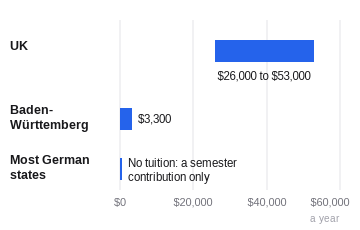
Cost is the main draw. Most public universities in Germany charge no tuition fees at all. Students pay a semester contribution, typically a few hundred dollars, which often includes a local transport pass.
Compare that with the UK, where international undergraduates pay between about $26,000 and $53,000 a year.
There are exceptions. Baden-Württemberg charges non-EU students about $1,650 a semester at every public university. The Technical University of Munich charges between about $2,200 and $6,600 a semester, depending on the programme. FAU Erlangen-Nürnberg will introduce fees for non-EU students from the summer semester of 2027.
Most Courses Need Proficient German
Most German-taught degrees require C1, the level the Common European Framework describes as proficient.
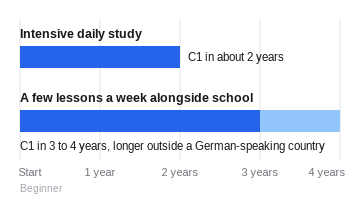
"A beginner studying intensively every day can reach C1 in about two years," says Oloffs. "With a few lessons a week alongside school, it takes three to four years, longer when the learner isn't living in a German-speaking country."
Universities accept a handful of certificates as proof: TestDaF, usually with a 4 in every section; the DSH-2, taken at the university; the Goethe-Zertifikat C1; and telc Deutsch C1 Hochschule. Students at schools offering the Deutsches Sprachdiplom (DSD II) can use that too.
German studied at school helps. IB German B or IGCSE German gives "a good head start on grammar and vocabulary," Oloffs says, though universities still ask for one of the certificates above.
English-taught degrees are the shortcut, and they are scarce at undergraduate level. Germany offers around 420 English-taught bachelor's programmes, about 4% of the total. Master's students have far more choice, with around 1,930.
Oloffs still recommends B1 German for anyone on an English-taught course. It "makes daily life, part-time work and internships far easier, and German employers value it."
The most common mistake, he says, is timing. Families who have never studied a foreign language formally "often underestimate how long it takes to reach C1."
The School Grades You Need
Students with A-levels need three general-education subjects, each at grade C or above. Two must come from a core list of languages, humanities, mathematics and the sciences. AS levels no longer count.
Medicine and pharmacy require three A-levels from mathematics and the sciences. Engineering and technical degrees require mathematics plus biology, chemistry, physics or computer science.
The IB Diploma is recognised when it meets the subject requirements agreed by Germany's education ministers. Students should check those rules early, ideally before choosing IB subjects.
GCSEs and IGCSEs alone do not give access to a German university.
What It Really Costs
Free tuition still leaves living costs. To get a student visa, applicants must prove they can support themselves, usually by depositing about $13,100 in a blocked account for the 2026 academic year.
After graduating, students can stay in Germany for up to 18 months to look for work.
For families in Asia weighing a British degree against a German one, the German route saves tens of thousands of dollars a year. It also takes two to four years of German, started well before the final year of school.
Stefan Oloffs is a German tutor and the founder of German Language Coach in London. Connect with him on LinkedIn.
Sources: 9 pages
- US dollar figures converted at November 2026 exchange rates
- German Language Coach interview with Prospectus, November 2026
- The PIE News
- DAAD
- ICEF Monitor
- MSinGermany 2026 tuition tracker
- GradGermany
- ApplyBoard
- BAMF
More in Curricula & exams
More- 16 November
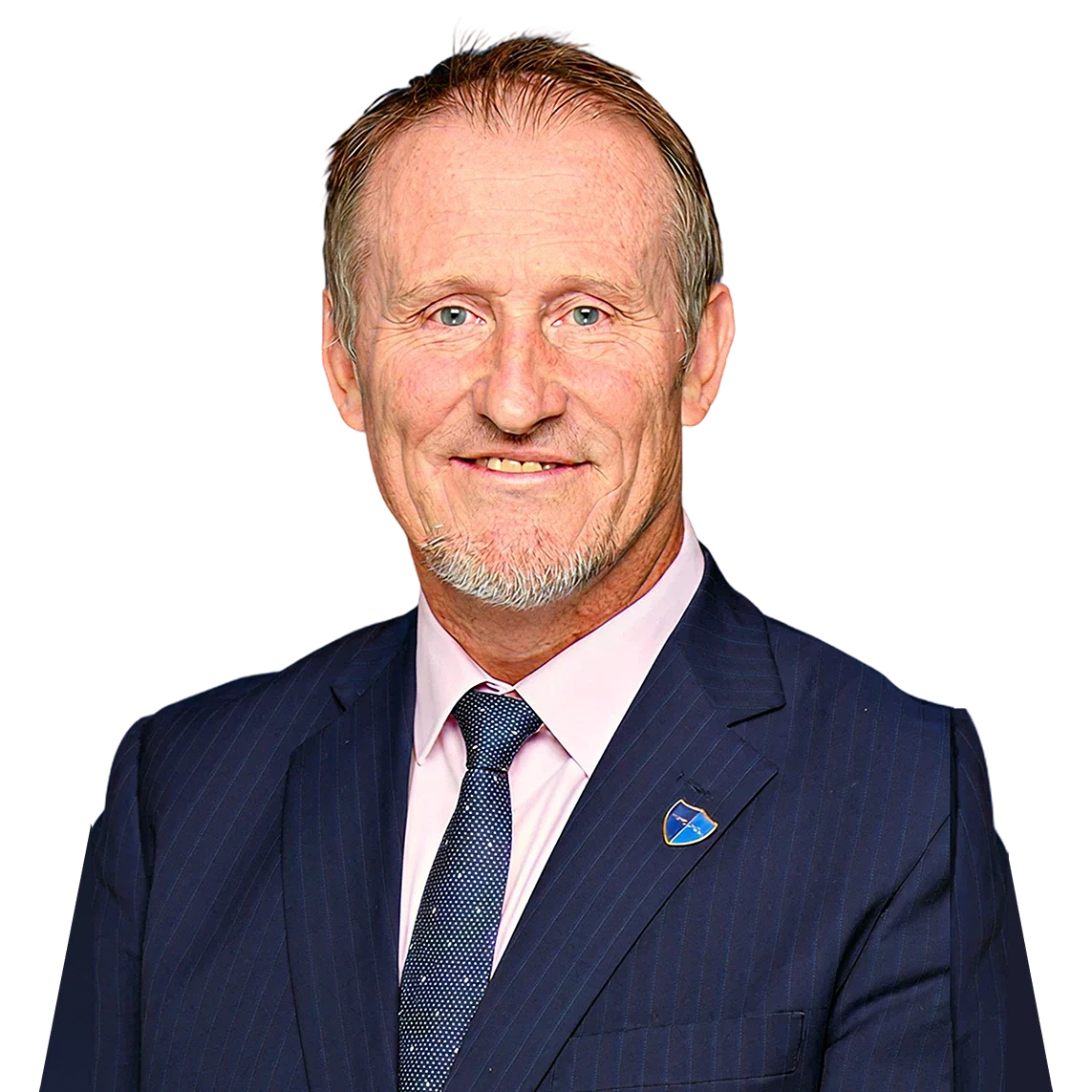
Dubai school with no primary homework since 2016 says most pupils beat expected progress
Arcadia British School's figures come as the UAE ends homework for its youngest state pupils, and two other Dubai schools describe their own limits.
Dubai
Dubai · 16 November
- 15 November
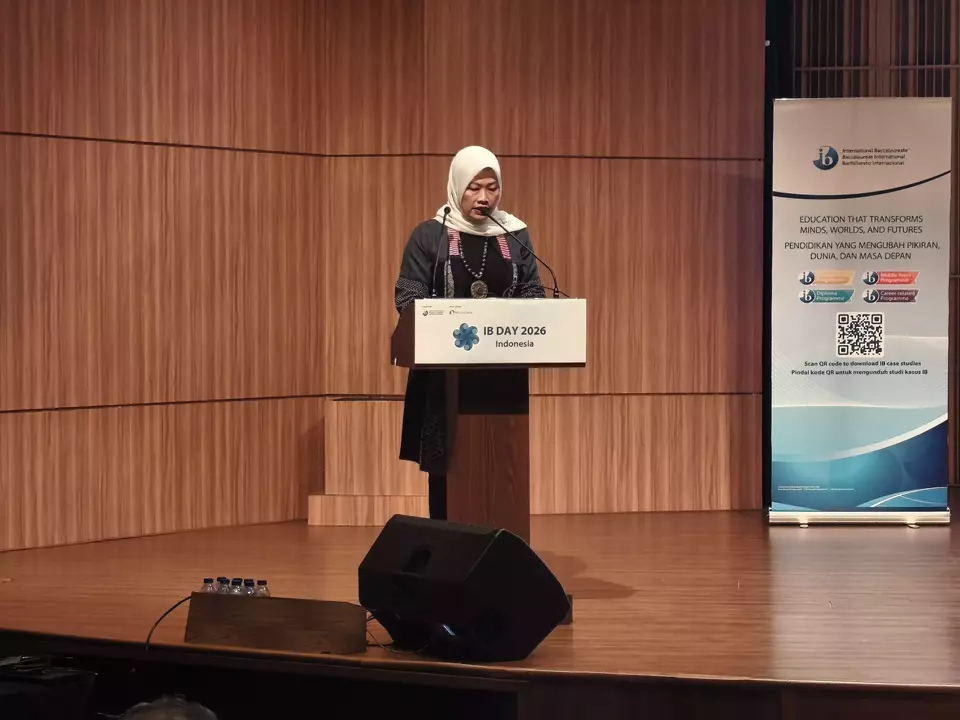
Indonesian official says the IB suits the new state Sekolah Garuda schools
Speaking at IB Day in Jakarta, a ministry director said international curricula can sit alongside the national one in the government's new selective schools.
Jakarta
Jakarta · 15 November
- 4 November
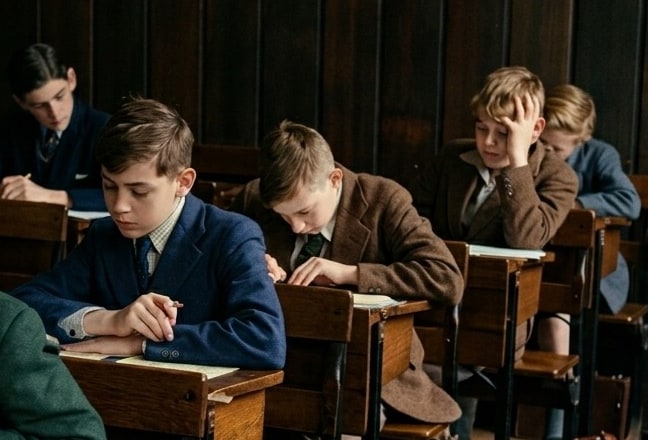
Cambridge International moves A-level results day forward to 28 July from 2027
Earlier June results give school leavers more time for university places and visas, and match OxfordAQA's new date.
Cambridge
Cambridge · 4 November
- 25 October
A levels explained in two minutes
Where they fit in school, choosing subjects, grades, exams, university entry, and A levels vs the IB.
25 October