The key facts on Chiang Mai's international schools
Most international families in Chiang Mai choose between three schools: Prem Tinsulanonda International School, Lanna International School and Chiang Mai International School (CMIS).
Fees at those three range from about $9,700 to $23,800 a year, well below the leading schools in Bangkok.
Each of the three teaches a different system: the IB at Prem, British A-Levels at Lanna and an American curriculum at CMIS. The choice of curriculum usually decides the school, and the school decides where you live.
Admissions are less competitive than in Bangkok or Hong Kong. The bigger issue for families is the burning season, when smoke from fires blankets the valley for weeks each spring.
| School | Tuition |
|---|---|
| The main three | |
| Prem Tinsulanonda International School · IB, all four programmes; boarding · Mae Rim | 11,900–23,200 |
| Lanna International School · British, IGCSE, A-Level · Hang Dong | 12,300–23,900 |
| Chiang Mai International School · American, AP · city centre | 9,700–16,500 |
| Other international options | |
| Nakornpayap International School · American, AP · San Phi Sua, north of the city | 8,650–14,800 |
| Panyaden International School · Bilingual, British and IB Diploma · Hang Dong | 9,050–17,000 |
| Singapore International School · English, Chinese and Thai; Cambridge · city | 9,650–16,800 |
| American Pacific International School · IB; boarding campus in the Samoeng hills | 6,850–14,900 |
| Grace International School · American, Christian, AP · Hang Dong | 8,800–10,800 |
International schools in Chiang Mai. Annual tuition, US$, 2025–26. Tuition ranges from the youngest to the oldest year group. New families also pay a one-off joining fee: $3,850 at Prem, $3,000 at CMIS and $2,700 at Lanna. Boarding is extra. Fees for 2026–27 and 2027–28 are likely to be higher. Converted at THB33.55 = US$1
Where the schools are in Chiang Mai
The three main schools sit in three different directions. Prem is in Mae Rim, about 20km north of the city. Lanna is in Hang Dong, about 15km to the south-west. CMIS is in the centre.
There is no metro, so almost every family drives. A cross-city trip takes about 30 minutes; Nimman to Mae Rim takes about 40.
Schools
1Prem Tinsulanonda International School
2Lanna International School
3Chiang Mai International School
4Nakornpayap International School
5Panyaden International School
6American Pacific International School
7Grace International School
Landmarks
8Chiang Mai International Airport
9Tha Phae Gate (Old City)
Malls
10MAYA (Nimman)
11Central Chiangmai
12Central Chiangmai Airport
13Promenada
Hospitals
14Chiang Mai Ram Hospital
15Bangkok Hospital Chiang Mai
16Maharaj Nakorn Hospital
Shaded areas are family neighbourhoods: Nimman · Old City · Hang Dong · Mae Rim.
Chiang Mai's three leading international schools
Prem Tinsulanonda International School
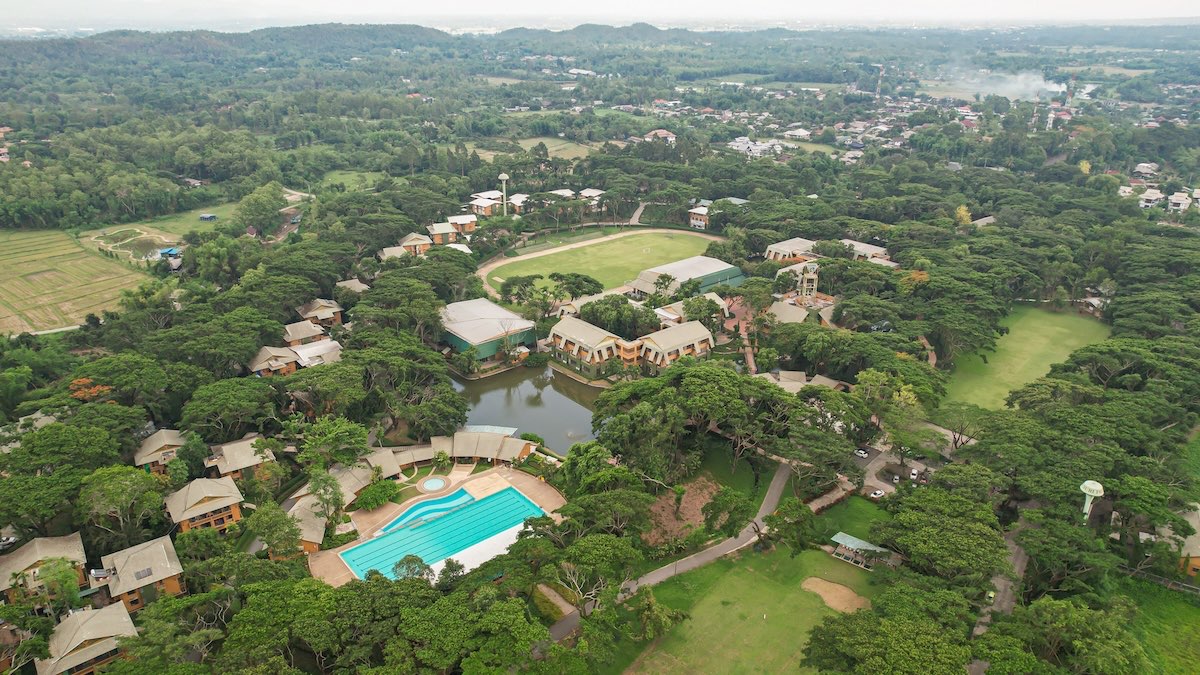
Prem sits on a 100-acre campus in Mae Rim and is the only school in Chiang Mai to offer all four IB programmes, from the Primary Years to the Diploma and the Career-related Programme.
It is also one of the few schools in northern Thailand to take boarders, from about age 11. Day pupils either live nearby in Mae Rim or face a 30–40-minute drive from the city.
Lanna International School
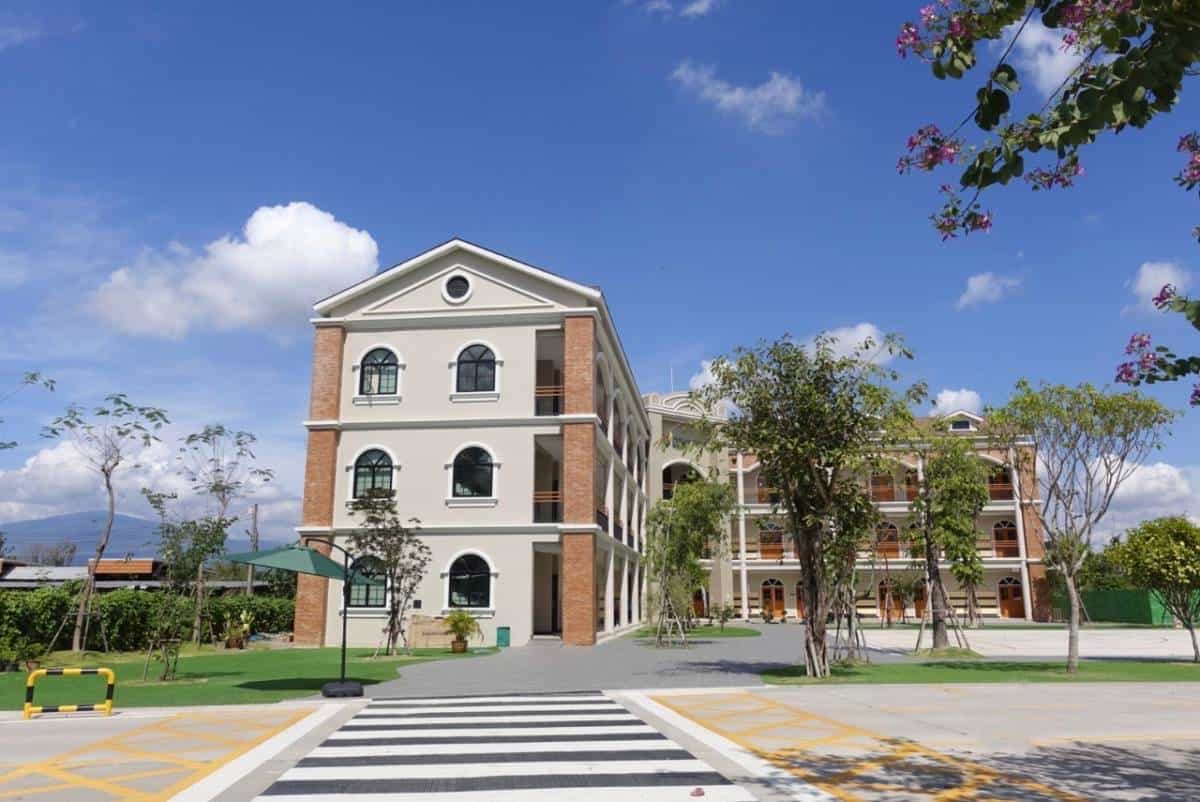
Lanna is the largest of the three, with about 980 pupils, and the established British choice. It teaches the English curriculum to IGCSE and A-Level, the only one of the three main schools with a full A-Level programme.
The city's biggest cluster of international families lives around its Hang Dong campus, which is the main reason so many of them live south-west of the city.
Chiang Mai International School
Founded in 1954, CMIS is the oldest international school in the city. It follows an American curriculum to Advanced Placement and is accredited by WASC.
It is smaller than Lanna, and its facilities are less extensive than Prem's, but its central location suits families living in Nimman or the Old City. It is also the least expensive of the three.
Other leading international schools in Chiang Mai
Nakornpayap International School, north of the city, is a second American option with about 300 pupils, teaching to Advanced Placement.
Panyaden in Hang Dong combines a bilingual curriculum with an environmental, Buddhist-values ethos, and offers the IB Diploma. American Pacific International School teaches the IB, with a boarding campus in the Samoeng hills.
Grace International School is a Christian school following an American curriculum, popular with missionary, NGO and Korean families. The Singapore International School teaches in English, Chinese and Thai.
Several smaller British-curriculum schools have opened since 2018, generally with lower fees. Some stop at IGCSE.
Pupils and nationalities in Chiang Mai's schools
Thai families make up a large share of most international schools' pupils, alongside expatriate families working for NGOs, universities, missions and businesses, and a growing number of remote workers.
The mix varies a lot between schools. Grace, for instance, leans towards missionary and Korean families, while Prem's boarders come from across Thailand and abroad.
Planning around the burning season
From roughly February to April, smoke from forest and crop fires settles in the Chiang Mai valley. Air quality regularly reaches unhealthy levels and in bad years ranks among the worst in the world.
In April 2026, PM2.5 readings in Mae Rim reached 409 micrograms per cubic metre, many times the level considered safe.
Schools keep children indoors and cancel outdoor activities on the worst days, and many have air filtration in classrooms. Prem's hillside campus is reported to escape the worst on some days, but the whole valley is affected.
Families typically fit air purifiers at home, and many plan a trip away during March.
Waiting lists and when to apply in Chiang Mai
Places are generally available with a few months' notice, although popular year groups at the main three schools can fill.
- Curriculum. IB, British or American usually narrows the choice to one main school.
- Notice. Three to six months' notice is usually enough, though some year groups come close to full.
- Boarding. Boarding places at Prem are limited.
- Start dates. Most schools start the year in August, but dates differ; mid-year entry is common.
- Joining fees. One-off fees of $2,700–3,850 apply at the main three schools.
Where families live in Chiang Mai
Most families choose a house near school. Hang Dong is the largest family area; Nimman and the Old City suit families at CMIS who want to walk to cafés and shops.
| Area | Home | Rent |
|---|---|---|
| Hang Dong / Baan Waen · Gated estates and gardens; Lanna, Panyaden, Grace | house | 1,050–1,800 |
| Hang Dong / Baan Waen · Townhouses on the same estates | townhouse | 450–750 |
| Mae Rim · Rural, houses with land; Prem | house | 600–1,200 |
| Nimman / Old City · Urban and walkable; CMIS | 2-bed flat | 600–1,050 |
Family neighbourhoods. Typical monthly rent, US$. Indicative ranges
A family of four in Hang Dong, with a car and private health insurance, typically spends about $2,400–3,600 a month before school fees.
Practical points for moving to Chiang Mai
Visas come first. Employed parents usually hold a work permit and Non-B visa, with children on dependant visas. Remote workers can use the five-year Destination Thailand Visa, which allows dependants and lets children attend international schools. Higher earners can apply for the 10-year Long-Term Resident visa.
Thai is on the timetable. Most schools teach Thai language and culture; for pupils with Thai passports it is compulsory.
Hospitals. Chiang Mai Ram and Bangkok Hospital Chiang Mai are the main private hospitals with English-speaking staff. Maharaj Nakorn, the university hospital, handles complex cases; Bangkok is just over an hour away by air.
Getting around. A car is close to essential for families. Ride-hailing apps cover short trips, and most schools run buses.
Also in Chiang Mai
- Lanna International School Thailand · Hang Dong
- Prem Tinsulanonda International School · Mae Rim
- Singapore International School Chiangmai · Si Phum
Sources: 10 pages
- Prospectus on-the-ground research in Chiang Mai, including conversations with parents, admissions teams and school leaders
- International Schools Guide: Best international schools in Chiang Mai; Nakornpayap International School; Grace International School
- International Schools Database: International schools in Chiang Mai
- Schoozy: International school fees in Chiang Mai
- Superagent: Where expats live and what they pay
- IQAir: Chiang Mai among the most polluted cities, March 2026; The Star: PM2.5 reaches extremely dangerous levels; Khaosod English: Air quality improves as hotspots decline
- ISSA Compass: Relocating to Thailand with your family in 2026
- Prem Tinsulanonda International School · Lanna International School · Chiang Mai International School · Nakornpayap International School · Panyaden International School
- school fee schedules
- Prospectus research
More in Choosing a school
More- 19 November
Choosing an international school and a neighbourhood in Manila for 2027
Most families shortlist International School Manila, The British School Manila, Brent and Nord Anglia, and live near the school because a school run can take 90 minutes each way.
Manila
Manila · 19 November
- 18 November
Johor Bahru's international schools, homes and the commute to Singapore
Which international schools families choose, what they cost, where people live, and what the new rail link to Singapore changes
Johor Bahru
Johor Bahru · 18 November
- 17 November
A 2027 guide to Hanoi's international schools and family neighbourhoods
Which international schools families choose, what they cost, where people live, and what to know about Hanoi's winter air
Hanoi
Hanoi · 17 November
- 16 November
Ho Chi Minh City's international schools, fees and districts for families
Which international schools families choose, what they cost, where people live, and how to get a place for August 2027
Ho Chi Minh City
Ho Chi Minh City · 16 November