Is the British curriculum the same as the English one?
The UK has four curricula. International schools teach England's: the national curriculum, IGCSEs and A-levels.

When an international school says "British curriculum", it means the English one: the national curriculum for England, IGCSEs at 16 and A-levels at 18. There is no UK-wide curriculum. Scotland, Wales and Northern Ireland each set their own, with different structures and exams.
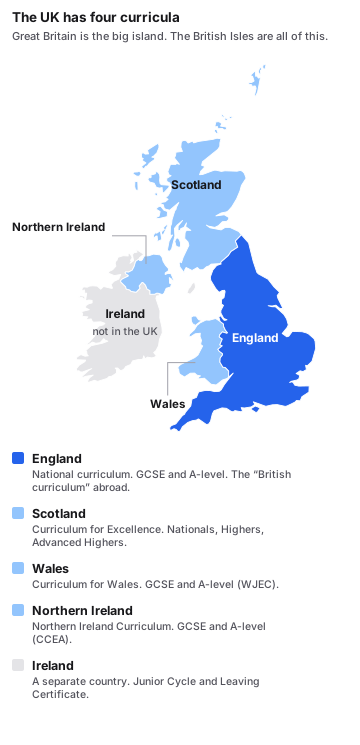
Curriculum differences
- England. Key Stages from 5 to 16. Core subjects, statutory targets. GCSEs at 16, A-levels at 18. This is the version international schools teach, usually with IGCSEs.
- Scotland. The Curriculum for Excellence, ages 3 to 18. Broader skills over testing. National 5s at 15–16, Highers at 16–17, Advanced Highers at 17–18. University can start at 17.
- Wales. The Curriculum for Wales. Six broad Areas of Learning and Experience. Progression steps at 5, 8, 11, 14 and 16 instead of Key Stages. Welsh is compulsory to 16. GCSEs and A-levels through WJEC, with the GCSEs being remade for Wales from 2025.
- Northern Ireland. The Northern Ireland Curriculum. Key Stages, GCSEs and A-levels through CCEA. Thinking skills and personal capabilities run through every subject. Still selects at 11: grammar schools use transfer tests.
- Ireland. Not in the UK. Junior Cycle to 15, then the Leaving Certificate at 18, which sets university entry on a points system.
What "Britain" and "British" mean
- Great Britain. The island: England, Scotland and Wales.
- United Kingdom. Great Britain plus Northern Ireland. The country.
- British citizen. A citizen of the UK, from any of the four nations.
- British Isles. A geographical term: the UK, Ireland and the smaller islands. Ireland does not use it.
- British curriculum. In an international school, the English national curriculum with IGCSEs and A-levels.
Compare British-curriculum schools
Fees, ages and admissions for every British school we list, city by city.